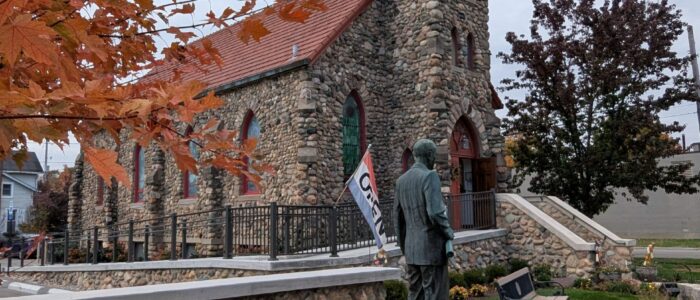
 The "Old Stone Church" museum for Tecumseh Area Historical Society is open each Saturday from 10:30 a.m. to 3:30 p.m. Stop in and learn the history of our community which is 200 years old here in Michigan!
 Welcome to the Tecumseh Area Historical Society and Museum
Since 1824, Tecumseh has been developing a rich history in southeast Michigan. As the first settlement in Lenawee County, Tecumseh has no shortage of stories to tell and information to share. We are proud to showcase how our community has evolved over the years. Exhibits are always changing and highlight important people and historical events that helped to mold Tecumseh into the town we love today. Stop by the Tecumseh Historical Museum and discover all that the past has to offer!
Read our Latest NEWSLETTER

NEW AT THE MUSEUM THIS SPRING
- Thanks to a grant from the State of Michigan “250MI”, computer tablets have been installed around the museum to display a continuous loop of Tecumseh’s vintage family movies, oral history interviews, old-time footage of working at Tecumseh Products, etc. Thanks to Chad Smith and Deb Kogelman for their work and dedication.
- New displays also feature vintage women’s fashion, a tribute to USA’s 250th anniversary, main street Tecumseh in the past, and antique photos of Tecumseh’s sport teams.
- The vestibule at the museum was painted and re-imagined. Thanks to Carol Duncan-Poore and Gary Honeycutt for their beautiful work.